.webp) playh5stop.com
playh5stop.comThe Weapon That Won't Hold Still: How Control Resonant Turns a Genre Swap Into Its Whole Argument
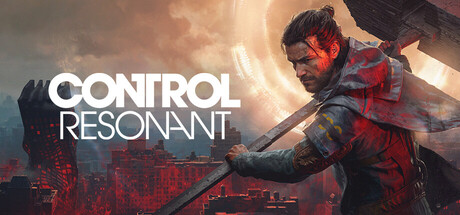
There is a very specific kind of confidence required to take a beloved shooter and turn its sequel into a melee game, and Control Resonant does not seem interested in hiding how deliberate that confidence is. The original Control was, underneath its bureaucratic horror and its shifting architecture, a game about distance. You held a gun, you held a shield of telekinetic debris, you kept the world at arm's length while the Federal Bureau of Control tried, mostly in vain, to impose order on things that refused to be ordered. Resonant throws that distance away almost immediately. Dylan Faden does not carry a service weapon requisitioned from a supply closet. He carries the Aberrant, a weapon that shifts shape mid-fight, that behaves less like a tool he wields and more like something he is negotiating with in real time. That single change, from a gun that stays a gun to a weapon that refuses to hold one form, is not a stylistic flourish borrowed from Devil May Cry or Bayonetta because those games are popular right now. It is the entire thesis of Control Resonant, expressed through the feel of combat rather than through a line of dialogue, and once you notice that the genre swap is doing narrative work rather than just aesthetic work, the whole game reorganizes itself around a much more interesting question than "is the combat good."
That question is simple to state and much harder to sit with: what does it mean to fight something when the thing fighting on your behalf is itself unstable? The first Control let Jesse Faden channel an alien intelligence, but it kept that channeling contained within recognizable tools, a gun, a set of powers with names and cooldowns, a Bureau full of procedures meant to make the incomprehensible feel administratively manageable. Resonant strips that containment away. Dylan is not an agent working within an institution's careful attempt to bottle the paranatural. He is someone who has spent years in confinement precisely because he could not be bottled, and the game's combat system never lets you forget that his strength and his instability are the same thing wearing different clothes.
A Genre Change That Argues With Itself
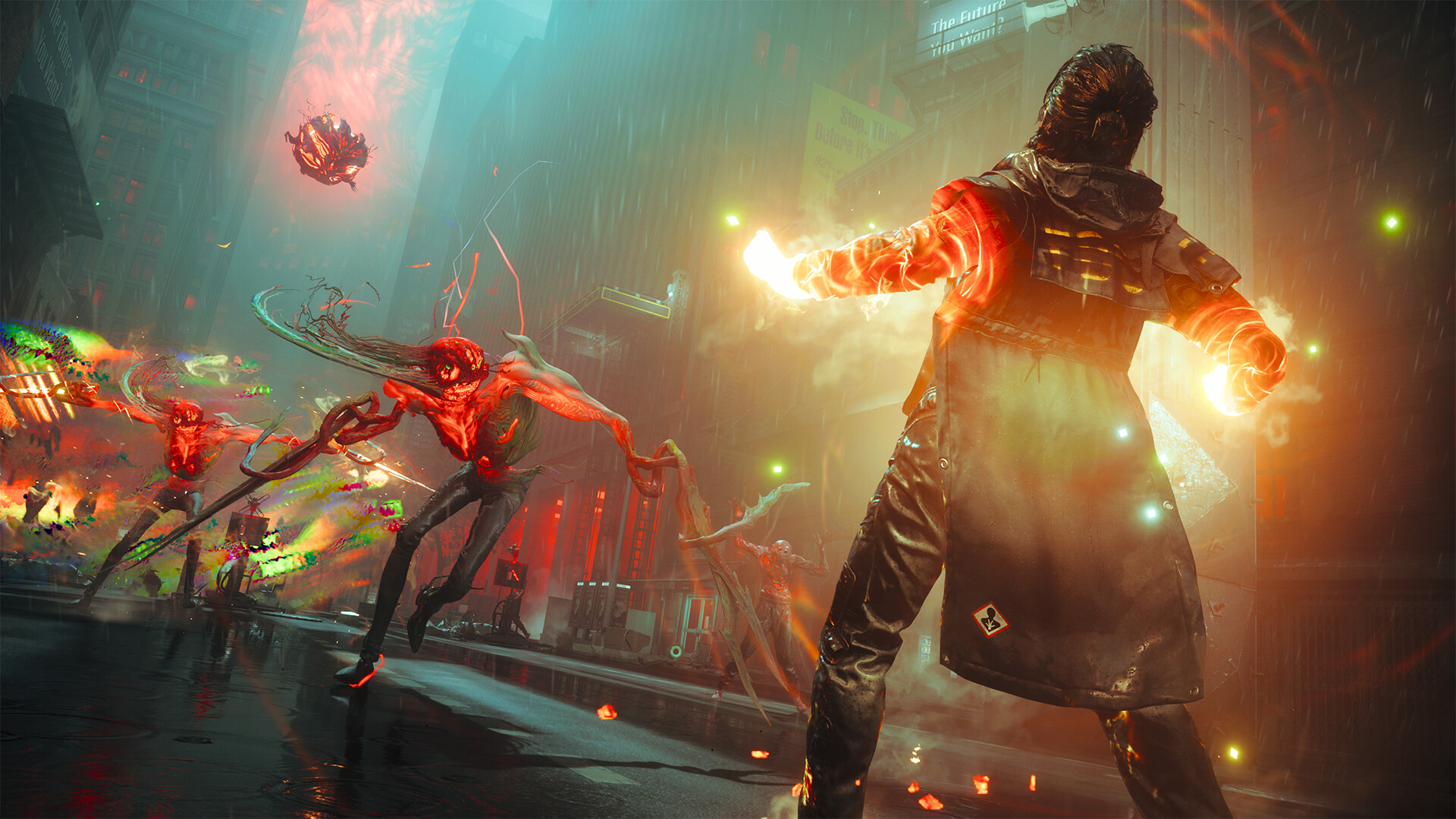
It would be easy to read the shift to melee combat as Remedy simply chasing a different audience or reacting to trends in action game design, and the marketing materials leaning on comparisons to modern character-action titles do not entirely discourage that reading. But spend even a few hours with the Aberrant and a different explanation starts to feel more accurate. A gun, mechanically, is an instrument of control in the most literal sense: point, pull a trigger, apply force at a distance, keep the source of danger separated from the source of harm. Melee combat collapses that separation by design. You are always close enough to be hit back, always one mistimed input away from the thing you're fighting reaching you first, and Resonant leans hard into that proximity as a feeling rather than treating it as an incidental consequence of the genre.
The Aberrant makes this literal by refusing to commit to a single identity as a weapon. It stretches, it hardens, it reconfigures itself depending on the situation and, the game strongly implies, depending on how much Dylan is straining against his own limits in a given fight. This is not simply a combo system with a flashy transformation animation attached. It reframes every encounter as a question about how much of yourself you're willing to let the fight pull out of you, because pushing the weapon further, into more aggressive or more extreme configurations, visibly costs something even as it opens up more devastating options. A few of the ways this shows up in actual play:
- Extended, more aggressive forms of the Aberrant tend to leave Dylan more exposed between attacks, so power and vulnerability rise together rather than one simply replacing the other.
- Certain configurations are clearly more effective against specific Resonant bosses, which pushes the player toward reading an enemy's behavior rather than defaulting to one dominant playstyle.
- The weapon's shifts are visually and audibly unstable in a way that never lets a given form feel fully "solved," even after the player has grown comfortable with it.
None of that would matter much if it were just a resource-management gimmick layered on top of otherwise conventional hack-and-slash combat. What makes it land is that the game's story is telling you, at the same time, that Dylan's entire arc is about the danger of letting something powerful and uncontained define who you are. The mechanics and the narrative are making the same argument from two different directions, and that kind of alignment is rare enough in big-budget action games that it deserves to be named directly rather than taken for granted.
The Bosses as Case Studies in Losing Control
The decision to structure the game's major encounters around the Resonants, boss-scale entities each tied to a specific zone and a specific backstory, extends this same idea outward from Dylan's personal struggle into the wider warped Manhattan he's moving through. A Resonant is not simply a bigger health bar with a scarier design, though the scale and imagination on display in some of these encounters, including the now widely circulated image of a massive figure missing her lower jaw, make it clear Remedy was not interested in restraint when it came to spectacle. What makes these fights resonate, to use the game's own vocabulary, is that each one functions as a kind of externalized version of the same loss-of-control the player is experiencing through Dylan and the Aberrant.
A Resonant's backstory typically frames it as something or someone who was once ordinary, once contained within a recognizable identity, before circumstance or exposure to paranatural forces pulled them apart and rebuilt them into something the city itself has to physically warp around. Fighting one of these entities is never framed as simply defeating a monster. It plays more like an encounter with a possible future, a demonstration of what happens when the process Dylan is currently undergoing runs to its full, uncontained conclusion. This gives even the most spectacular boss fights an undercurrent of dread that has nothing to do with difficulty numbers. You are not just worried about losing the fight. You are looking at something that used to be a person and recognizing, uncomfortably, that the weapon in your own hands is built from the same basic material.
This is where the game's decision to change protagonists, moving from Jesse to her brother Dylan while keeping Jesse present as the Oldest House's new Director, does real thematic work rather than functioning as a simple change of perspective for its own sake. Jesse's arc in the first game was about earning institutional authority over the incomprehensible, becoming the Director, learning to administrate the impossible. Dylan's arc runs almost in the opposite direction. He starts the game having been held, contained, managed by the very institution his sister now runs, and his journey through warped Manhattan is framed less as gaining control and more as figuring out how much of himself he can survive losing. Putting these two arcs in direct family relationship, siblings pulling toward opposite ends of the same fundamental problem, gives Resonant an emotional throughline that a straightforward "bigger, badder sequel" premise would not have earned on its own.
What a Warped City Says When It Isn't Talking
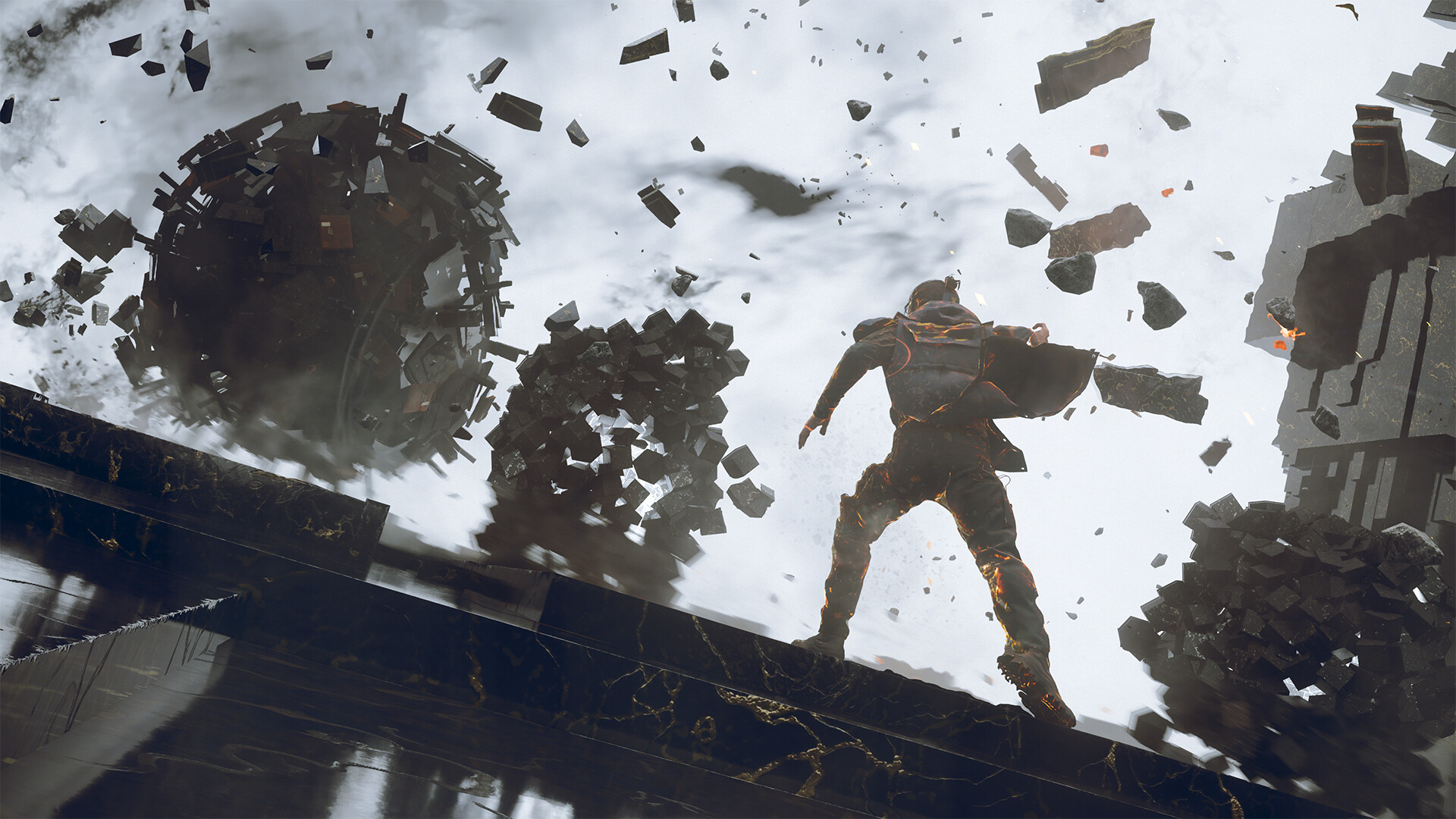
Manhattan itself, reshaped by the invading force that escaped the Oldest House, plays a role in this argument that is easy to undersell if you only think of it as a striking backdrop for combat. The reporting on the game has emphasized how thoroughly the city folds and distorts, how gravity becomes negotiable rather than fixed, and it would be simple to file that under pure visual spectacle, another example of Remedy's well-established talent for making architecture feel alive and hostile. But the specific way the world bends around the player matters more than just how impressive it looks in a trailer, because a city whose physical laws are actively negotiable functions as an environmental echo of everything happening to Dylan personally. If the ground beneath your feet can no longer be trusted to behave the way ground is supposed to behave, the audience is being primed, quietly and constantly, to accept that a person's own body and power might be just as negotiable.
This connective tissue between environment and protagonist is where Resonant earns comparisons to Remedy's own back catalog rather than to the character-action genre it superficially resembles. A studio with a long history of using distorted, dreamlike spaces as psychological terrain, going back through Alan Wake's shifting small-town geography and Control's own bureaucratic labyrinth, does not reach for a warped Manhattan by accident. The city's instability and Dylan's instability are meant to be read as the same phenomenon at two different scales, and once you start noticing the pattern, small environmental details, a street that folds back on itself, a skyline that seems to breathe, stop reading as texture and start reading as commentary on the fight happening in the foreground.
The Risk in Betting Everything on One Idea
It would be dishonest to treat this alignment between mechanics, story, and world as something the game achieves flawlessly across its entire length, and the reception so far, while strongly positive, has been honest about the fact that a genre change this dramatic carries real risk alongside its ambition. A game built around the tension between power and instability has to keep finding new ways to make that tension feel fresh across dozens of encounters, and the character-action genre in particular has a well-documented tendency to flatten exactly this kind of nuance once a player has fully learned a moveset. There is a real question, one the early critical response gestures toward without fully resolving, about whether the later stretches of the game manage to keep the Aberrant feeling genuinely unstable once its various forms have all been unlocked and mastered, or whether familiarity eventually turns "unpredictable weapon" into just another combo tree with a dramatic paint job.
There is also an inherent tension in asking players to simultaneously enjoy becoming powerful and feel unsettled by that same power, a needle that action games have historically struggled to thread. Devil May Cry and Bayonetta, the genre touchstones Resonant invites comparison to, generally resolve this tension by leaning fully into empowerment and treating style and spectacle as unambiguous rewards. Resonant's more ambivalent stance toward Dylan's growing strength is a bolder choice, one more in line with the psychological horror roots of the franchise, but it is also a harder one to sustain for an entire game's runtime without either undercutting the fun of getting stronger or softening the horror of what that strength actually represents. Whether Remedy fully threads that needle across the whole campaign, or whether the back half occasionally resolves the tension by simply letting the power fantasy win out, seems to be exactly the kind of question that will separate the game's strongest defenders from its more measured admirers once more of the playerbase has had time to sit with the full experience rather than just its opening hours.
A Sequel That Understands What It Changed and Why
What ultimately makes Control Resonant worth paying close attention to, beyond the pedigree of the studio or the strength of any individual boss fight, is the discipline behind its central swap. Changing a franchise's core genre between installments is the kind of decision that can easily read as either fearless reinvention or a studio simply following wherever the market currently points, and the difference between those two readings almost always comes down to whether the new mechanics are actually saying something the old ones couldn't. Resonant's melee combat is not simply Control with a sword instead of a gun. It is an argument, built into the way the Aberrant refuses to sit still in your hands, about what happens to a person who has spent his life being told his power needs to be contained, once containment finally, catastrophically fails.
That argument does not require the player to consciously register it in order to work. Someone who picks up Control Resonant purely for the thrill of a shapeshifting weapon and a gallery of nightmare-fuel boss designs will still have a genuinely strong time, and the game's technical and artistic ambition speaks for itself independent of any thematic reading layered on top. But for a franchise that has always used the shape of its systems to say something about the shape of its ideas, from the file-cabinet horror of the original Control's mixed-media storytelling to the looping, uncanny geography of Alan Wake, a sequel that changes its entire combat identity and manages to make that change mean something is not just a bold swing. It is the clearest possible sign that Remedy understood exactly what it was risking, and exactly why the risk was worth taking.